
Latest Stories | नई कहानियाँ

The Soul of Bihar
March 2026

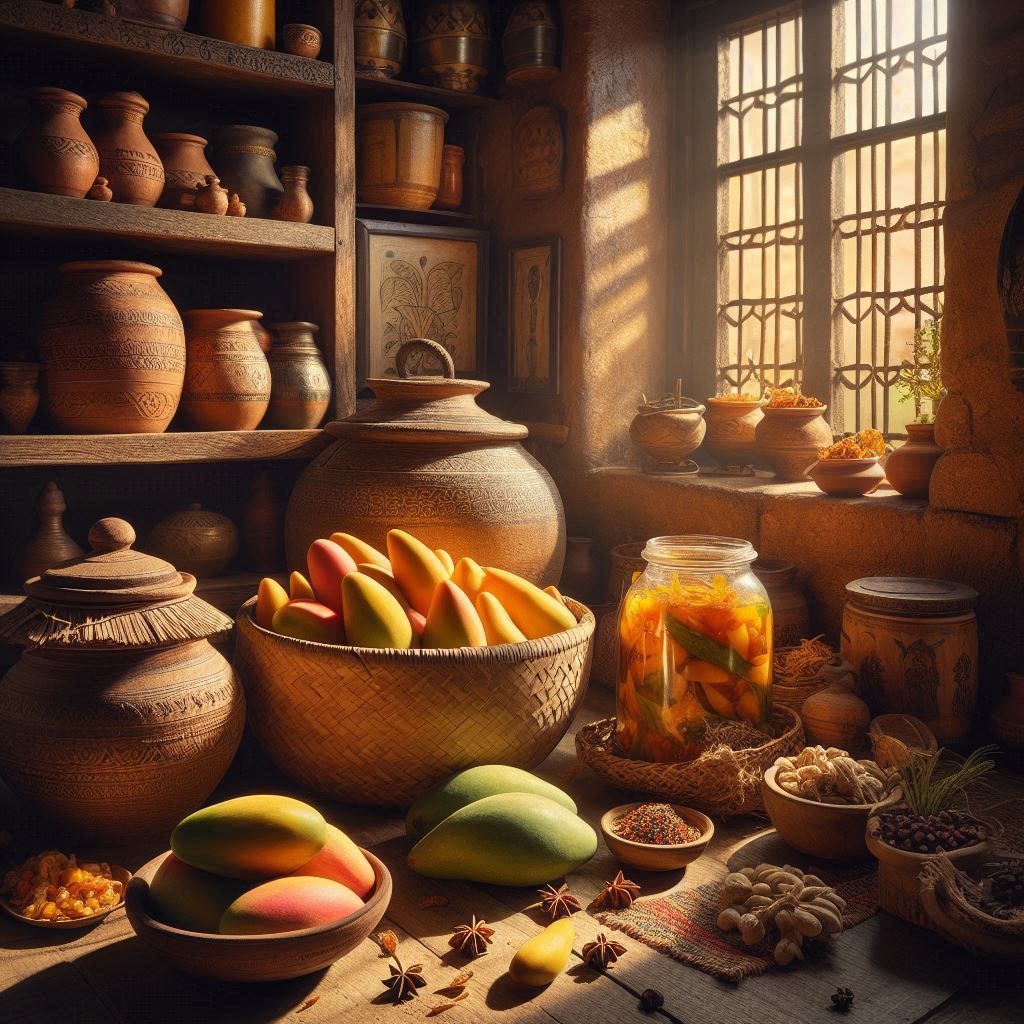
The Soul of Bihar

The story of traditional mango pickle and its deep connection to Bihari culture.

Read More
A Taste of Tradition
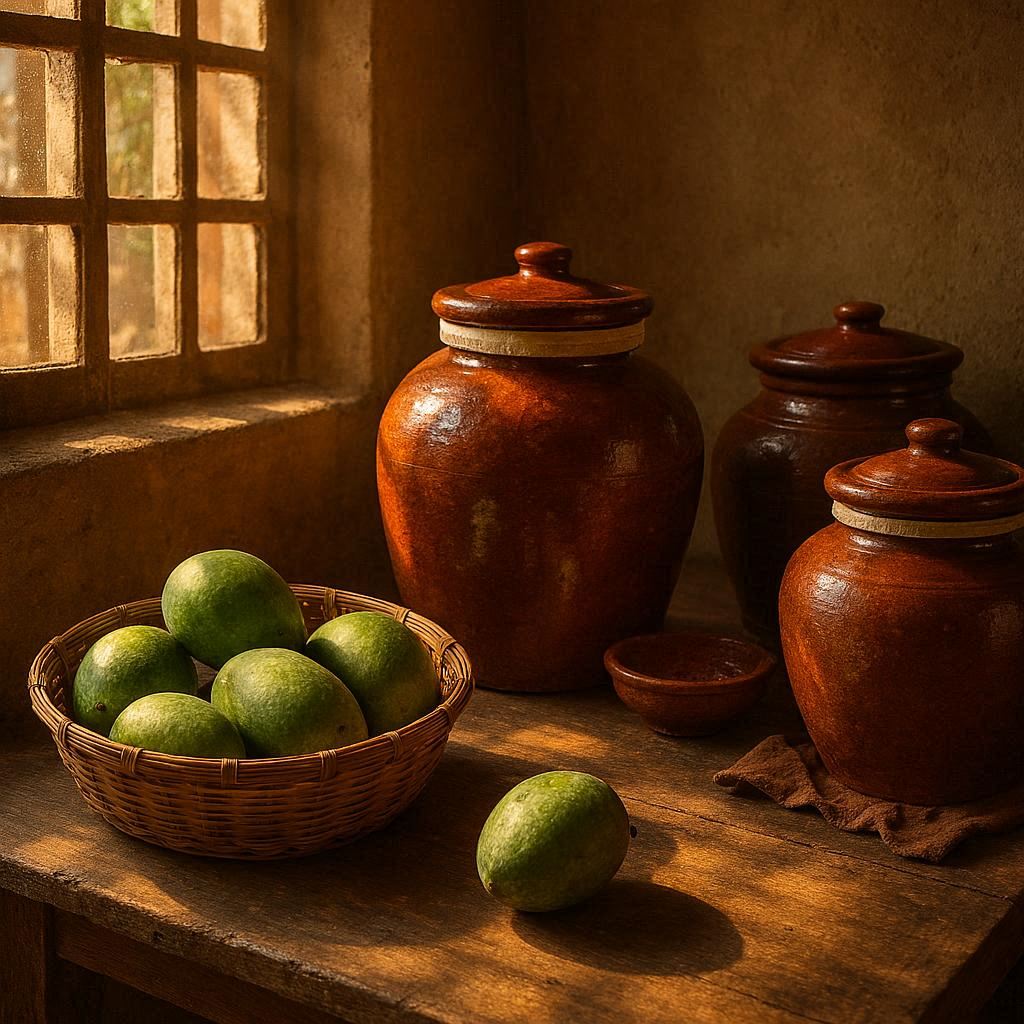
March 2026

A Taste of Tradition

The story of making mango pickle in Bihar – a moment of culture, heritage, and family bonding.

Read More
The Sacred Rules
March 2026

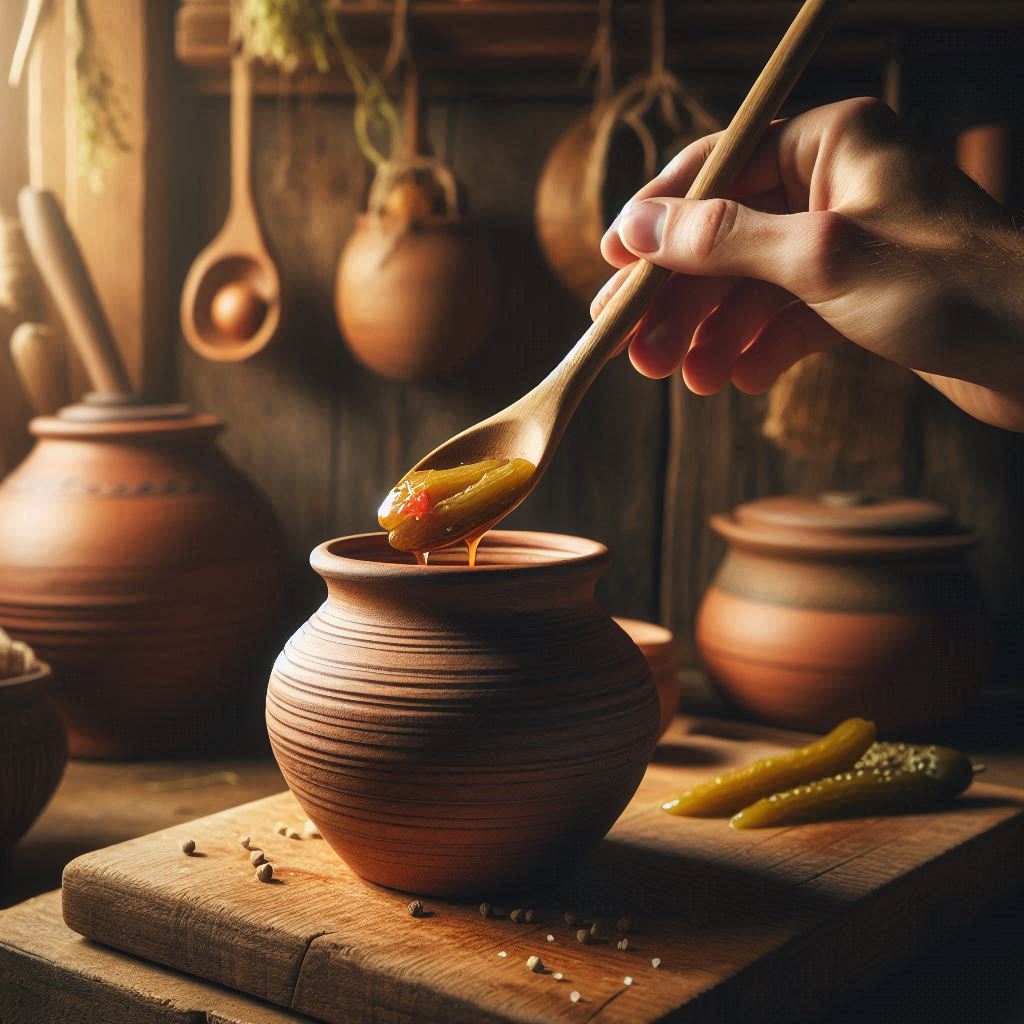
The Sacred Rules

Why we never touch pickles with certain hands – ancient wisdom for pure preservation.

Read More
The First Mango Pickle
March 2026

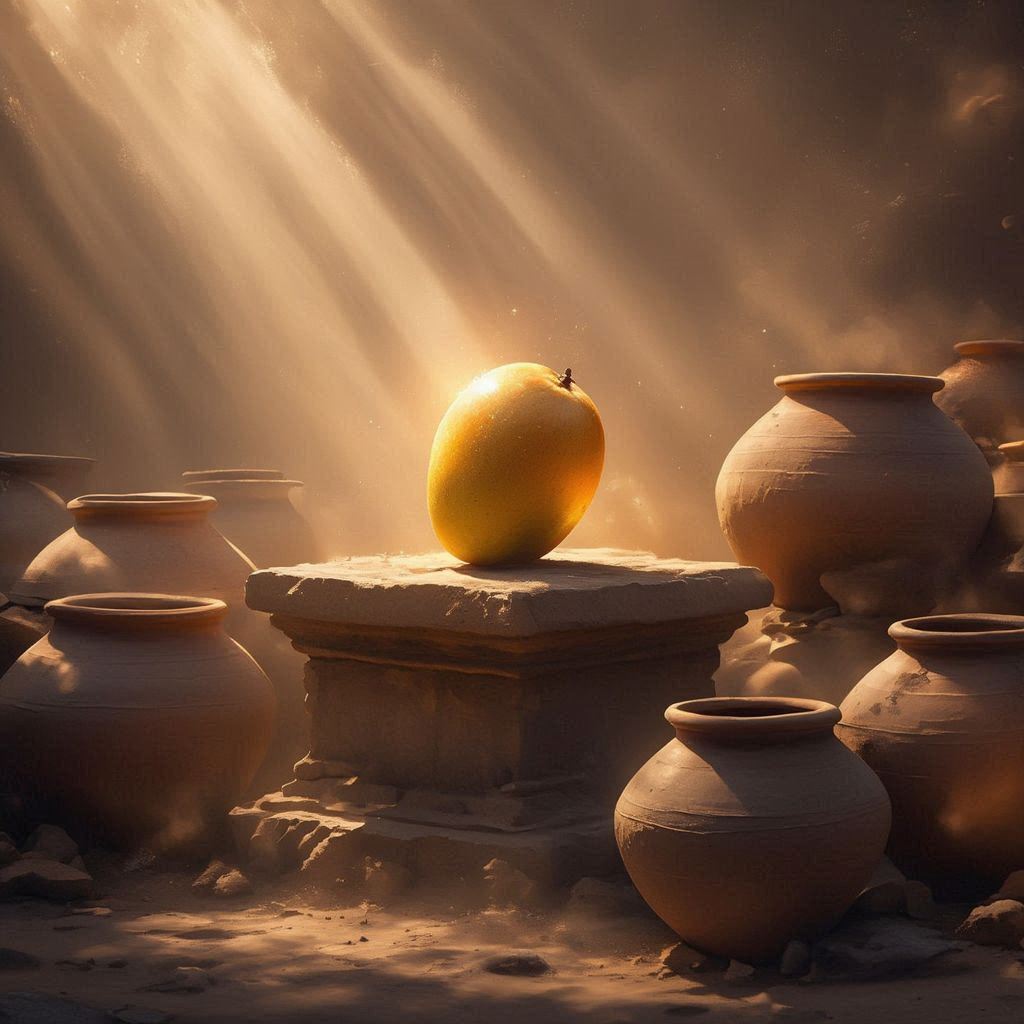
The First Mango Pickle

A gift from the Sun God – the legend of how pickle was born.

Read More
Seven Generations
March 2026

Seven Generations

A jar full of memories – how pickle keeps families connected.

Read More
Monsoon Secret
March 2026

The Monsoon Secret

Why pickles sleep in summer – the secret life of pickles.

Read More
Magic of Jawan
March 2026

The Magic of Jawan

Why carom seeds make Bihari pickles special – the secret spice of Bihar.

Read More
Kacchi Ghani Oil
March 2026

Kacchi Ghani Oil

The liquid gold of Bihar – why we use only traditional cold-pressed oil.

Read More
Sun Drying
March 2026

The Art of Sun-Drying

Nature's original preservation method – three days in the Bihar sun.

Read More
Glass Jars
March 2026

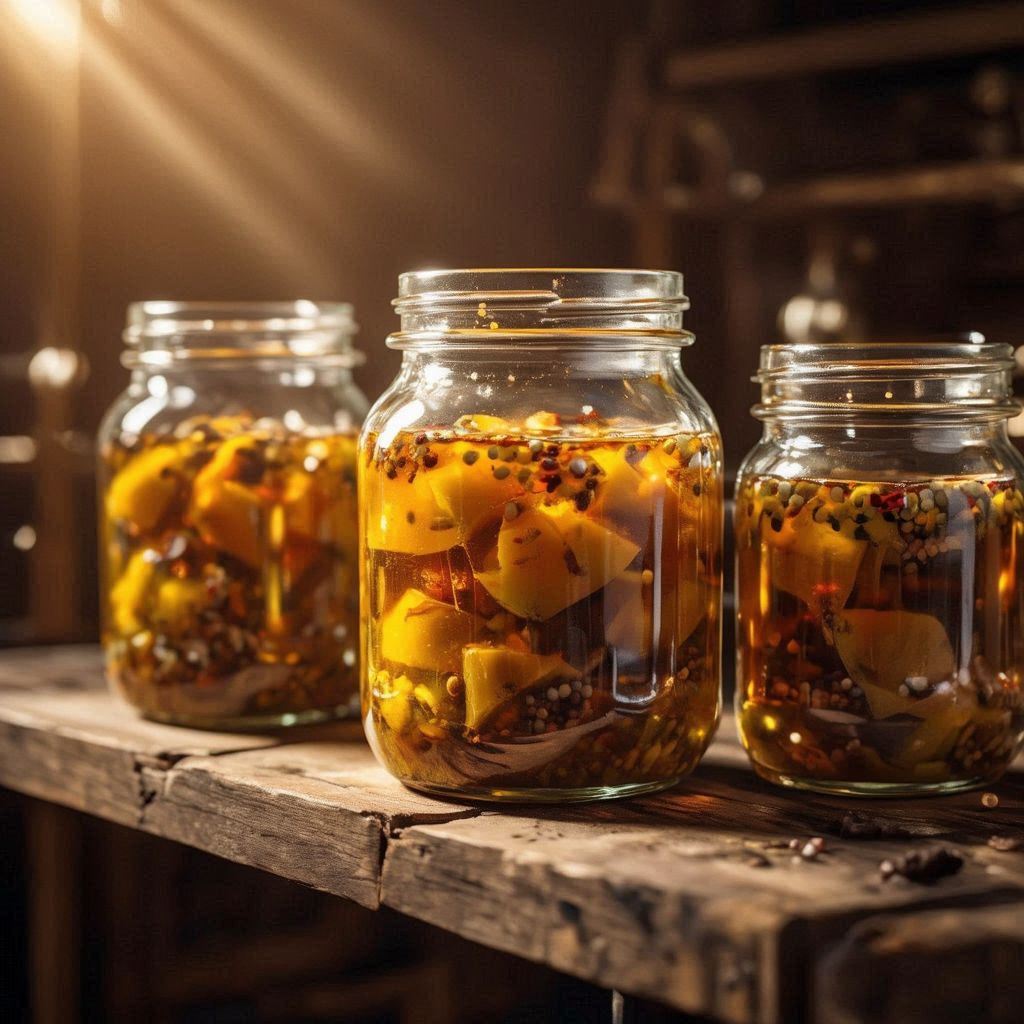
Glass Jars Only

Why we never use plastic – purity in every jar.

Read More
Heritage | विरासत

The Soul of Bihar in Every Bite: The Story of Traditional Mango Pickle

March 2026 5 min read | ५ मिनट पठन
The Soul of Bihar

In Bihar, summer is not just a season—it is a feeling. The arrival of summer brings with it the fragrance of raw mangoes, the warmth of the sun, and a tradition that has been passed from one generation to another: the making of homemade mango pickle.

For many families, mango pickle is more than just food. It is a memory of childhood, a taste of home, and a symbol of love prepared by mothers and grandmothers. The moment raw mangoes appear in the local markets, households begin preparing jars of pickle that will last throughout the year.

The process itself is full of emotion and tradition. Fresh raw mangoes are carefully washed, cut, and mixed with simple spices that have been used in Bihar kitchens for centuries. Mustard oil, with its strong and authentic aroma, gives the pickle its bold character. Everything is mixed slowly and lovingly, just like it has been done for generations.

The jars are then placed under the warm summer sun. Day after day, the mango pieces absorb the spices and oil, slowly transforming into a rich, flavorful pickle. This natural process is what makes traditional pickle so special. There are no shortcuts, no artificial flavors—only patience, sunlight, and tradition.

For people who grew up in Bihar, the taste of mango pickle instantly brings back memories. It reminds them of family meals, sitting together on the floor with a plate of rice, dal, and a small spoon of spicy pickle that makes every bite more delicious.

Even today, many people living far from home search for that same authentic taste they remember from their childhood. The taste that cannot be copied by factory-made products. The taste that only comes from traditional methods and genuine care.

Our pickle carries that same spirit. It is inspired by the traditions of Bihar, prepared with respect for the old ways, and created to bring the warmth of homemade food to your table.

Every jar tells a story—of summer afternoons, family kitchens, and the timeless flavors of Bihar.

When you open a jar of traditional mango pickle, you are not just tasting a condiment. You are experiencing a piece of culture, a piece of home, and a tradition that continues to live on with every generation.

Tradition | परंपरा

A Taste of Tradition: The Story of Making Mango Pickle in Bihar

March 2026 4 min read | ४ मिनट पठन
A Taste of Tradition

In the villages and towns of Bihar, the arrival of summer brings a beautiful tradition that has been part of family life for generations — the making of mango pickle. It is not just a recipe; it is a moment of culture, heritage, and family bonding.

When the raw mango season begins, families eagerly wait to prepare their yearly batch of pickle. Early in the morning, fresh green mangoes are brought from the local market. The mangoes are carefully washed and dried in the open air, often placed on a clean cloth under the warm sunlight. Elders in the family always remind everyone that the mangoes must be perfectly dry, because even a little moisture can spoil the pickle.

Once the mangoes are ready, they are cut into pieces. This is often a moment when family members gather together. Mothers, grandmothers, and sometimes neighbors sit together, talking and sharing stories while preparing the mango pieces. These moments turn a simple kitchen task into a cultural gathering filled with laughter and memories.

The mango pieces are then mixed with traditional spices that have been used in Bihar kitchens for centuries. Salt, turmeric, chili powder, and aromatic seeds are blended with mustard oil. The strong fragrance of mustard oil fills the air, reminding everyone of the authentic taste of homemade pickle.

After everything is mixed, the mangoes are placed into clean jars. These jars are then kept in the sunlight for several days. The sun slowly helps the mangoes absorb the spices and oil, transforming them into a rich and flavorful pickle. Every day, the jar is gently shaken or stirred, continuing the process that nature itself completes.

This slow and natural preparation is what makes traditional mango pickle special. It carries patience, care, and the wisdom of generations. For many people from Bihar, the taste of mango pickle instantly brings back memories of childhood summers, family kitchens, and meals shared together.

Even today, this tradition continues to live on. Each jar of pickle is not only a delicious addition to food, but also a symbol of Bihar's rich culture and heritage — a simple yet powerful reminder that some traditions never fade.

Wisdom | ज्ञान

The Sacred Rules: Why We Never Touch Pickles with Certain Hands

March 2026 6 min read | ६ मिनट पठन
The Sacred Rules

In every Bihari household, children learn early: never put your hand in the pickle jar without permission. These aren't just superstitions – they're centuries-old food safety practices, wrapped in cultural wisdom. Let's explore three sacred rules.

A. The Menstruation Hand – A Tradition of Respect

Cultural Belief: In traditional Bihari families, women during menstruation are asked not to touch pickles. It's believed that the "heat" or "energy" of a menstruating woman can disturb the pickle's delicate balance, causing it to spoil. This practice is part of a wider set of customs that honour a woman's body during her cycle, giving her rest from certain chores.

Scientific Sense: Menstruation involves hormonal changes that can affect body temperature and skin microbiome. While there's no direct evidence that a woman's touch spoils pickles, the tradition may have roots in hygiene. Before modern sanitation, menstruation was associated with ritual purity in many cultures. The rule ensured that pickles – a precious, year-long food – were handled with extra care, minimising any risk of contamination. Today, we respect this tradition as a reminder that pickle-making is sacred, deserving of focused attention.

B. The Eaten Hand – Saliva's Secret Power

Cultural Belief: "Never use a spoon that has been in your mouth to take pickle from the jar." This rule is drilled into every Bihari child. It's considered disrespectful to the food, as if you're sharing your personal germs with the whole community's supply.

Scientific Sense: Saliva contains enzymes (like amylase) and bacteria that can break down food. When you dip an "eaten" spoon back into the pickle, you introduce microorganisms that can ferment or spoil the batch. Natural pickles rely on a delicate balance of salt, oil, and acid. Even a tiny amount of moisture or foreign bacteria can tip that balance, leading to mould or off-flavours. The rule ensures the pickle stays pure – and safe to eat for months.

C. The Wet Hand – Water, the Hidden Enemy

Cultural Belief: "Always dry your hands completely before touching the pickle." Grandmothers would scold if they saw wet fingers near the jar. Water was seen as an impurity that invited bad luck – and spoiled pickle.

Scientific Sense: Water is the number one enemy of natural pickles. Pickles are preserved by creating an environment where harmful bacteria cannot grow – high salt, low water activity, and an oil barrier. Introducing water (even a few drops on a wet hand) dilutes the salt and creates pockets where bacteria and fungi can thrive. Mould loves moisture. That's why the rule is absolute: only dry, clean utensils must ever touch the pickle. It's not superstition; it's microbiology passed down through generations.

Legend | पौराणिक कथा

The First Mango Pickle – A Gift from the Sun God

March 2026 4 min read | ४ मिनट पठन
The First Mango Pickle

Long ago, when the world was young, the Sun God grew tired of his daily journey across the sky. He decided to rest on earth for a while, taking the form of a golden mango. A kind farmer found the glowing fruit and, not knowing it was divine, offered it to his hungry children. But the children were full, so the farmer's wife – a wise woman named Radha – decided to preserve it. She cut it into pieces, mixed it with salt and spices, and left it in the sun. When she opened the pot weeks later, the mango had transformed into something magical – tangy, spicy, and long-lasting. The Sun God, pleased with her ingenuity, blessed her family with abundant mangoes every summer. And that's how the first pickle was born.

Moral: Great things come from patience and creativity – and the sun's warmth is a gift we must use wisely.
Family | परिवार

The Pickle That Connected Seven Generations

March 2026 4 min read | ४ मिनट पठन
Seven Generations

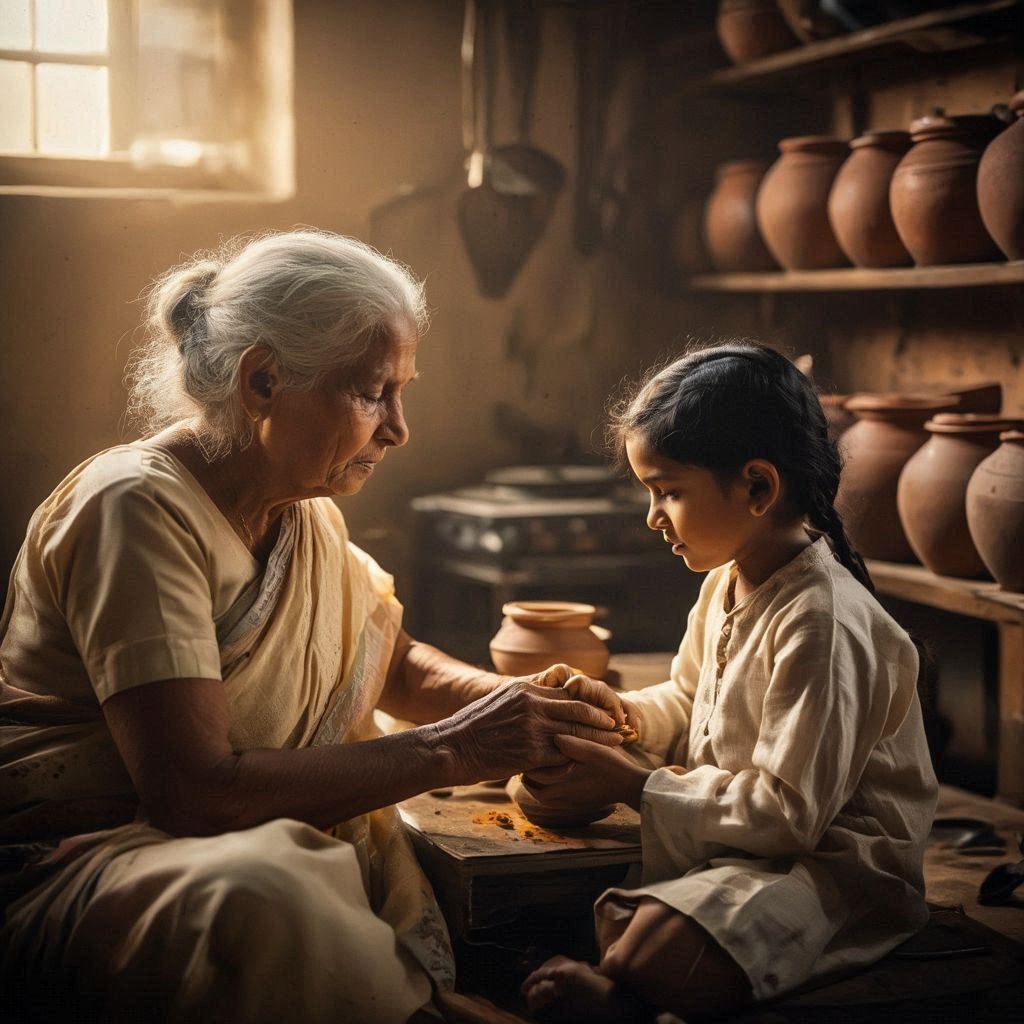
In a small village, a little girl named Chutki loved watching her great-grandmother make mango pickle. The old woman would tell stories with every spice she added. "This mustard seed," she'd say, "came from your great-great-grandfather's field. This fennel, from the wedding of your grandmother's sister." The pickle jar became a living history book. When Chutki grew up and moved to the city, her great-grandmother gave her a small jar of that year's pickle. "Taste this," she said, "and you'll taste our love." Chutki kept the jar for months, eating just a tiny bit on special days. Even now, whenever she opens a jar of Bihar Ki Aachār, she remembers: every bite carries the stories of those who came before.

Moral: Food is memory. When we eat traditional pickles, we connect with our ancestors.
Nature | प्रकृति

The Monsoon Secret – Why Pickles Sleep in Summer

March 2026 3 min read | ३ मिनट पठन
Monsoon Secret

"Why do we only make mango pickle in summer?" little Raju asked his grandmother. She smiled and took him outside. "Look at the sun, beta. It's strong now, perfect for drying. But watch the mango trees." They walked to the orchard, where green mangoes hung heavy. "In monsoon, these trees will rest, gathering strength for next year. Our pickles do the same. After we make them in summer, they sleep in their jars, soaking up the spices. By winter, they'll be awake and delicious." Raju learned that pickles, like trees, have seasons. They're made when the sun is generous, and they mature in darkness, just like secrets.

Moral: Everything has its time. Patience makes things better – even pickles.
Spices | मसाले

The Magic of Jawan – Why Carom Seeds Make Bihari Pickles Special

March 2026 4 min read | ४ मिनट पठन
Magic of Jawan

If you ask any Bihari grandmother what makes her pickle unique, she will smile and whisper one word: Jawan.

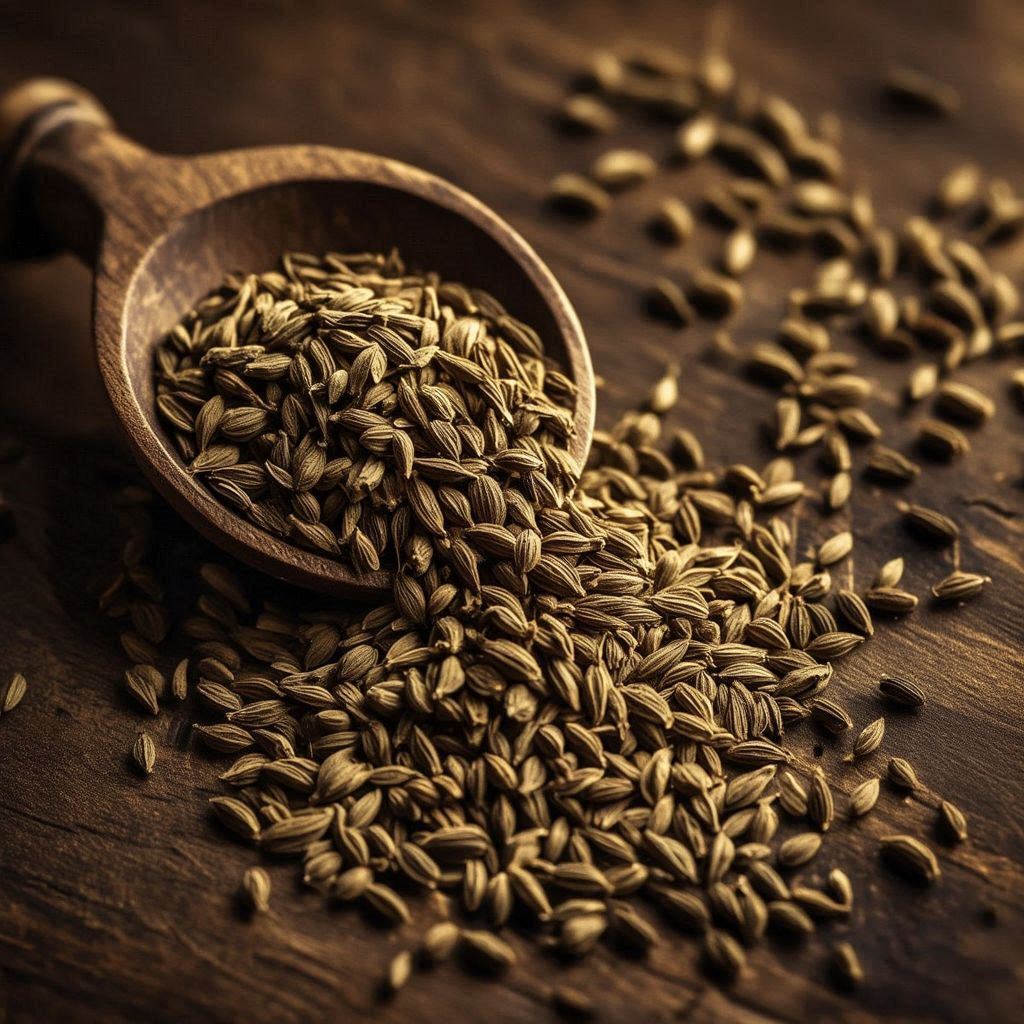
Jawan, also known as carom seeds or ajwain, is the secret weapon of Bihari kitchens. These small, oval-shaped seeds look like cumin but taste completely different – sharp, pungent, and slightly bitter, with a flavour reminiscent of thyme.

Why Jawan?

In the old days, when refrigeration didn't exist, grandmothers needed spices that did more than just taste good. They needed spices that helped preserve food and aid digestion.

Jawan is nature's gift for exactly this purpose:

  • It has strong antimicrobial properties that help prevent spoilage
  • It aids digestion – perfect for rich, oily pickles
  • Its sharp flavour cuts through the oil, creating balance
  • It adds a distinctive taste that says "Bihari" without words

The Jawan Tradition

In Bihar, jawan is used not just in pickles but in many traditional dishes. It's believed to warm the body, improve appetite, and keep the stomach healthy. When added to pickle, it slowly releases its essential oils over months, so the flavour deepens with time.

At Bihar Ki Aachār, we use generous amounts of premium jawan in every batch. It's our signature, our identity, and our connection to generations of Bihari cooks who knew that the best pickles are made with wisdom, not just recipes.

Ingredients | सामग्री

Kacchi Ghani Mustard Oil – The Liquid Gold of Bihar

March 2026 4 min read | ४ मिनट पठन
Kacchi Ghani Mustard Oil

In the world of pickles, oil is not just an ingredient – it's a preservative, a flavour carrier, and a tradition all rolled into one. At Bihar Ki Aachār, we use only Kacchi Ghani mustard oil.

What is Kacchi Ghani?

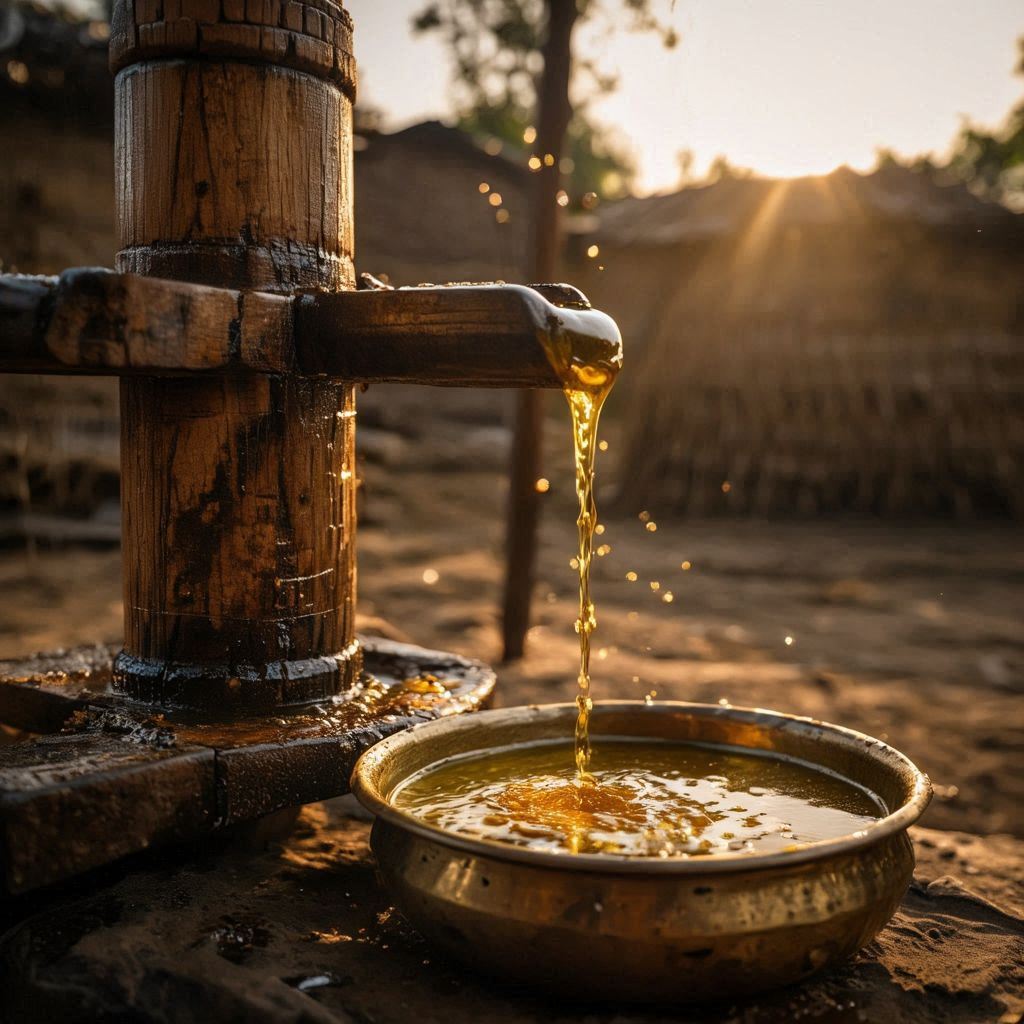
"Kacchi Ghani" refers to the traditional method of cold-pressing mustard seeds. In this process, mustard seeds are crushed at low temperatures, preserving all their natural goodness. The oil that comes out is dark, pungent, and full of character – nothing like the refined, neutral oils found in supermarkets.

Why It's Perfect for Pickles

  1. Natural Preservative: Kacchi Ghani oil has natural antimicrobial properties. When pickle is stored in this oil, it creates a protective barrier against bacteria and fungi.
  2. Deep Flavour: The pungent, sharp taste of raw mustard oil mellows over time, slowly infusing the mango pieces with its unique character. After months of maturation, the oil becomes golden and aromatic.
  3. Tradition: For centuries, Bihari grandmothers have used only this oil. It's part of our identity, our taste memory.

When we make our pickle, we don't heat the oil excessively. We warm it just enough to remove its raw edge, then let it cool before mixing with spices. This ensures that the oil's natural properties remain intact while its flavour blends perfectly with the mango and jawan.

The result is a pickle that tastes authentic, lasts naturally, and carries the essence of Bihar in every drop.

Process | प्रक्रिया

The Art of Sun-Drying – Nature's Original Preservation Method

March 2026 3 min read | ३ मिनट पठन
Sun Drying

Before refrigerators, before chemical preservatives, there was the sun. At Bihar Ki Aachār, we still follow this ancient method.

Why Sun-Drying?

Fresh mangoes contain a lot of water. Water is the enemy of preservation – it's where bacteria grow. By sun-drying the mango pieces before pickling, we remove excess moisture naturally, without any chemicals.

The Process

  1. Cutting: Fresh, raw mangoes are washed and cut into even pieces.
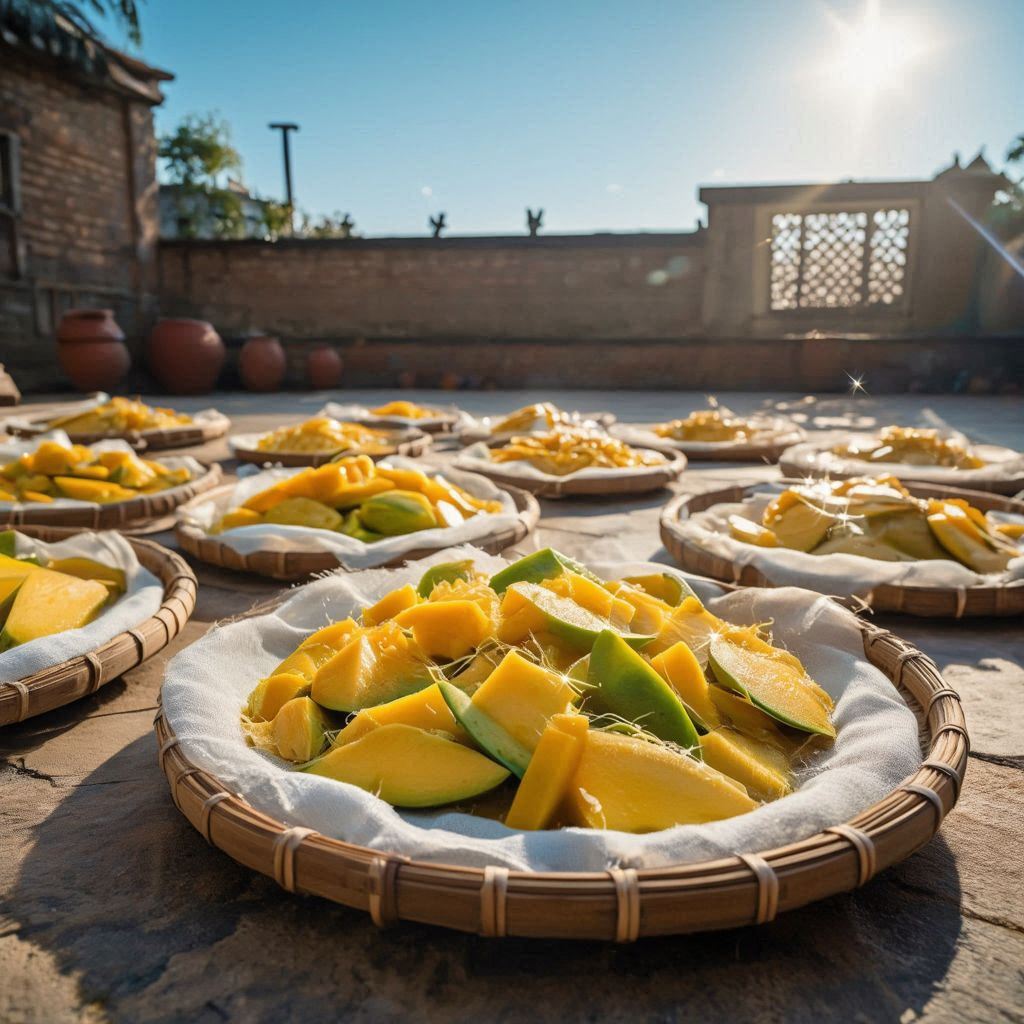
  2. Spreading: The pieces are spread on clean bamboo trays in a single layer.
  3. Covering: Fine muslin cloth is draped over them to protect from dust and insects.
  4. Sun-bathing: For three full days, from 10 AM to 4 PM, they rest under the sun.
  5. Turning: Every few hours, someone gently turns them so all sides dry evenly.

As the mango pieces lose water, their flavours concentrate. They become slightly chewy, more intense, and perfectly primed to absorb spices. This slow, gentle process cannot be rushed or replaced by machines.

Every jar of Bihar Ki Aachār contains mango pieces that have spent three days in the Bihar sun. Taste the difference that patience makes.

Values | मूल्य

Glass Jars Only – Why We Never Use Plastic

March 2026 3 min read | ३ मिनट पठन
Glass Jars

At Bihar Ki Aachār, we have a simple rule: no plastic. Every pickle we make goes into a beautiful, reusable glass jar.

Reason 1: Chemical Safety

Plastic can react with the oil and spices in pickles over time. Harmful chemicals can leach into the food, especially when stored for months. Glass is completely inert – it never reacts with anything. What goes into a glass jar stays pure.

Reason 2: Tradition

For centuries, pickles in India have been stored in ceramic or glass. Plastic is a modern invention, and not always a good one. By choosing glass, we honour the traditional way of preserving food.

Reason 3: Reusability

After you finish our pickle, don't throw the jar away! Glass jars are perfect for storing spices, homemade chutneys, or even as small flower vases. Every jar we sell becomes a useful part of someone's kitchen.

Reason 4: Environment

Plastic pollution is a huge problem. Glass is 100% recyclable and can be reused endlessly. By choosing glass, we do our small part for the planet.

Reason 5: Premium Feel

Let's be honest – glass looks and feels premium. When you hold a glass jar of our pickle, you know you're holding something special. It's not just food; it's a product made with love and care.

At Bihar Ki Aachār, we believe in purity – not just in our ingredients, but in our packaging. That's why you'll never find our pickles in plastic. Only glass. Because you deserve the best.

Join Our Pickle Family

Subscribe to receive stories, recipes, and special offers